Tree removal in Harlesden: safe, practical support for homes, landlords, and businesses
If you are looking for Tree removal in Harlesden, you are probably dealing with a tree that has become too large, too close to a building, damaged by weather, blocking access, or simply no longer suitable for the space it is in. In a busy North West London area like Harlesden, trees can affect front gardens, rear yards, shared driveways, commercial forecourts, and narrow access routes. The right service should be careful, efficient, and respectful of the surrounding property and neighbours.
Tree removal is not just about cutting down a tree. It is about assessing risk, planning the work safely, managing debris, and making sure the site is left tidy and usable. Whether you are a homeowner near Harlesden High Street, a landlord managing a rental property, or a business looking after a yard or frontage, a local team can make the process much easier. Local knowledge matters when space is tight, parking is limited, and there are walls, fences, extensions, cables, and neighbouring properties to consider.
This page explains what tree removal services involve, when removal may be the right option, what affects pricing, how the process works, and how to prepare. It is written to help real local customers decide whether to request a quote, arrange an inspection, or book their service now.
Why tree removal is needed in Harlesden

Harlesden has a wide mix of housing and commercial premises, from terraced streets and maisonettes to larger plots, yards, schools, retail units, and mixed-use buildings. That variety means trees can become a problem in different ways. A tree that looked manageable years ago may now be pressing against boundary walls, shading too much of a garden, or interfering with paths, drains, and rooflines. In older parts of the area, roots may also affect paving and underground services.
Another common reason for tree removal in Harlesden is safety. Storm damage, decay, fungal infection, splitting stems, dead limbs, or a sudden lean can make a tree more hazardous than it appears at first glance. If a tree has suffered damage after heavy winds, it is often sensible to have it assessed quickly rather than wait for the situation to worsen. Prompt action can reduce the risk of falling branches, property damage, and access issues.
Some customers also choose removal because the tree no longer suits the use of the space. For example, a front garden tree may be blocking natural light from a flat, a back garden tree may be dropping heavy leaf litter into a shared area, or a commercial site may need clearer visibility and safer vehicle access. In those cases, tree removal can be the most practical long-term solution.
Signs a tree may need to be removed

It is not always obvious when removal is necessary, and in many cases pruning or reduction may be enough. However, some signs suggest that full removal should be considered. These include visible decay, cavities in the trunk, large dead sections, recurring branch failures, severe lean, root upheaval, and significant storm damage. If the tree is close to a building or boundary, these signs deserve particular attention.
You may also notice practical issues that point towards removal. These might include repeated gutter blockages, paving lifted by roots, roots spreading under walls or patios, branches interfering with overhead lines, or a tree that is making a driveway too narrow for regular use. In Harlesden’s tighter residential streets, these concerns can quickly affect everyday living and neighbour relations.
In some situations, the question is not whether a tree is alive, but whether it is still suitable for the location. A large species planted too close to a property can outgrow the space over time. If the tree is now affecting the structure, light levels, or usability of the garden, then removal may be the most sensible option.
What our tree removal service includes

A professional tree removal service should begin with an assessment of the tree, the site, and the safest method of work. Every property is different, so the approach must be adapted to the tree size, access, nearby buildings, and ground conditions. In some cases, the tree can be felled in one controlled section if the area is open enough. In more confined spaces, sectional dismantling may be needed.
A typical tree removal service may include:
- Initial site assessment and discussion of the safest removal method
- Sectional dismantling where space is limited
- Controlled lowering of branches and trunk sections
- Removal of timber, branches, and related debris
- Clearance of the work area once the job is complete
- Optional stump grinding or advice on stump handling
- Attention to nearby walls, fences, sheds, paving, and planting
For many customers, the real value is in reducing disruption. A local team working in Harlesden should understand how to manage narrow access, shared front paths, parking restrictions, and the need to keep the site as tidy as possible throughout the job. Good preparation and careful execution are just as important as the cutting itself.
How tree removal works
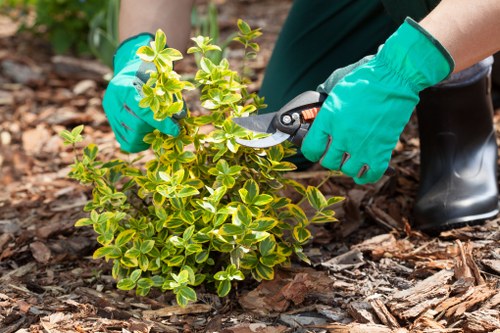
1. Assessment and planning
Every removal starts with a look at the tree and the site conditions. The team will consider tree species, size, location, condition, and any obstacles such as sheds, outbuildings, overhead lines, fences, or nearby homes. For properties in Harlesden, access often matters just as much as tree size, because side passages, rear lanes, and shared entrances can affect how equipment and waste are moved.
2. Choosing the right removal method
Depending on the site, the tree may be removed by felling it in one go or by taking it down in sections. Sectional dismantling is often the safer choice where space is limited or where the tree leans over a structure. If the tree is close to buildings, the work may involve ropes, rigging, and careful lowering to protect the surroundings.
3. Cutting and controlled removal
The tree is reduced in a planned sequence, with the team making sure branches and trunk sections are handled safely. The aim is to remove the tree without causing avoidable damage to the property, neighbour’s land, or garden surfaces. In residential streets with limited room for machinery, efficient manual handling can be especially useful.
What happens after the tree is down
Once the tree has been removed, there is still work to do. The branches, trunk sections, and smaller debris need to be cleared from the site. A proper tree removal service should leave the area safe and manageable rather than simply leaving a pile of timber behind. Many customers want the site ready for a new planting area, a paved space, or general use again.
If the stump remains, you may want stump grinding or another form of stump treatment. This is often worth considering if you plan to replant, returf, extend paving, or avoid future regrowth. Even where stump removal is not immediately necessary, you should at least understand what the remaining stump will mean for access, mowing, and future landscaping plans.
For local customers, the difference between a basic cut-down and a properly managed removal is often the finish. A clean, safe, and usable site is what most people actually want. If the tree has been causing ongoing concern, having the area fully cleared can be a real relief.
Tree removal for residential customers in Harlesden
Many residential properties in Harlesden have gardens, forecourts, shared entrances, or side access paths that make tree work more complex than it first appears. A tree in a small front garden may need to be dismantled carefully to avoid blocking the pavement or neighbour access. A rear garden tree may require waste to be moved through the property in a way that protects floors, patios, and fencing. These details matter, especially where space is tight.
Homeowners often request tree removal for a few common reasons: loss of light, root damage, leaning trees, dead or diseased timber, or simply because a tree has outgrown the available space. In some cases, a tree can make a garden less useful for children, pets, or entertaining. Removing it may create a better balance between greenery and practical outdoor space.
If you live in a terraced street, a converted flat, or a property with shared boundaries, it is worth thinking about how the work will affect neighbours. A local team experienced in tree removal in Harlesden should be able to plan access and disposal with minimal disruption, keeping the job organised and respectful from start to finish.
Common residential situations include:
- Front garden trees too close to the house or pavement
- Rear garden trees blocking light into living rooms or kitchens
- Storm-damaged trees leaning over fences or sheds
- Roots lifting paths, patios, or boundary edging
- Overgrown conifers or self-seeded trees taking over small gardens
Tree removal for landlords, managing agents, and businesses
Commercial and rental properties in Harlesden need tree care that is practical, tidy, and well planned. Landlords may need to deal with a tree that has become a tenant concern, is affecting a communal garden, or is causing complaints about shade, debris, or blocked access. Managing agents often need work carried out with as little inconvenience as possible to residents and visitors.
Businesses may need tree removal to improve visibility, safety, and access. A tree in a car park, service yard, loading area, or frontage can become a real issue if it blocks manoeuvring space or drops debris where customers and staff walk. For commercial sites, it is important to have work carried out efficiently and with clear communication about any temporary disruption.
Because local premises often have tight operating schedules, a sensible removal plan can make a big difference. It may involve arranging the work for a quieter time, keeping access routes clear, and ensuring waste is removed promptly. For commercial customers, time, safety, and presentation all matter.
Why a local Harlesden team is useful
There are practical advantages to using a local company for tree removal in Harlesden. Local teams are more likely to understand the layout of the area, the kinds of properties found here, and the access issues that often come with them. That can help with planning, waste removal, and general efficiency. In a busy part of North West London, those details save time and reduce stress.
Harlesden and nearby places such as Willesden, Kensal Green, Stonebridge, Park Royal, North Kensington, and Wembley can all present similar access challenges. Roads may be busy, parking may be limited, and some properties may only be reached via narrow side passages or shared entrances. A team used to working in this environment is better placed to carry out the job safely and neatly.
Choosing a local service also makes it easier to arrange an assessment and understand the practical steps involved. Rather than getting a one-size-fits-all answer, you can expect advice based on the tree, the site, and what is realistic for your property. This is particularly helpful if you are trying to decide between removal, reduction, or another type of tree surgery.
Access, parking, and site conditions in Harlesden
One of the biggest factors in any tree removal project is access. In Harlesden, many properties have limited on-street parking, narrow driveways, shared walkways, or rear access through small openings. That affects how materials are brought in, how safely waste is moved out, and whether larger equipment can be used at all. In some cases, manual dismantling is the best way to protect both the property and the street environment.
Parking and loading arrangements may also need thought. If the tree is close to a main road or a busy residential street, the team may need to work carefully to avoid blocking traffic or causing unnecessary inconvenience. A local crew should be used to planning around these constraints and adapting the work to the site rather than forcing a difficult setup.
Ground conditions can matter too. Wet lawns, narrow paved paths, and older boundary walls all influence the method of removal. Where the area is particularly tight, the service may need to be staged in smaller sections. This is where experience and sensible planning really pay off.
What affects the cost of tree removal?
Costs can vary because no two trees or sites are the same. Rather than looking for a fixed price online, most customers benefit more from a tailored quote based on the actual work required. The main factors that usually affect tree removal pricing are tree size, condition, location, and access. A small tree in an open garden will usually be simpler than a large mature tree next to a house, outbuilding, or boundary wall.
Other pricing factors may include whether the tree is dead, leaning, storm-damaged, or located near obstacles that require extra care. Waste volume also matters, because larger trees create more material to cut, carry, chip, and remove. If stump grinding is requested, that will normally be treated as a separate part of the work or an additional option depending on the site setup.
For local customers, it is helpful to understand that the cheapest option is not always the best value. The right service should consider safety, site protection, and proper clearance. A sensible quote should reflect the real job, not just the tree itself. Ask for a clear breakdown of what is included so you know what to expect before work begins.
Typical factors include:
- Tree height, spread, and trunk diameter
- Overall condition and structural stability
- Ease of access for equipment and waste removal
- Proximity to buildings, fences, and utility features
- Whether stump removal is needed
- How much debris and timber needs clearing
How to prepare for tree removal
Preparing well can make the job safer and smoother. Before the team arrives, try to clear the area around the tree as much as possible. Move vehicles if needed, secure pets, and make sure access paths are open. If there are garden ornaments, furniture, or fragile items nearby, it is sensible to move them to a safe place beforehand.
If the tree is in a shared or boundary position, it can be useful to let neighbours know about the work in advance. That is especially important if branches hang over adjoining gardens or if the removal may temporarily affect access or parking. Clear communication helps avoid misunderstandings on the day.
You may also want to think about what you want to do after the tree is removed. For example, will you want the stump ground out, the area levelled, or the space left ready for new planting? Having that in mind early can help the service be planned around your end goal rather than just the immediate cut-down.
Simple preparation checklist
- Clear cars from the work area if possible
- Move garden furniture, pots, and ornaments away from the tree
- Keep children and pets away from the site during the work
- Provide any relevant access information in advance
- Let neighbours know if shared space may be affected
- Decide whether stump grinding or extra clearance is needed
Tree removal versus pruning or reduction
Sometimes removal is the best answer, but not always. A tree that is healthy and structurally sound may only need pruning, crown reduction, deadwood removal, or a reshaping cut to solve the problem. If the issue is light loss, overhang, minor obstruction, or seasonal debris, trimming may be enough to restore balance without removing the tree entirely.
However, if the tree is unsafe, badly positioned, or beyond reasonable recovery, removal can be the more practical decision. It is often the right choice where the tree is causing ongoing damage, creating a serious hazard, or simply dominating a space that needs a different use. The right recommendation depends on the tree’s condition and the customer’s priorities.
A trustworthy local service should explain the difference clearly so you can make an informed decision. If removal is not necessary, you should be told that. If it is the best option, you should understand why. That kind of honest advice is especially important when you are investing in work on your home or premises.
What to expect on the day
On the day of the job, the team should arrive ready to assess the site again and confirm the plan. This is an important step because conditions can change after rain, wind, or new access issues. Once the method is confirmed, the work area is made safe, and the tree is removed in a controlled way. If the tree is large or awkwardly positioned, the process may take longer than a simple felling job, but that is often what makes it safe.
Throughout the job, you should expect careful handling of branches, timber, and equipment. The site should be kept as tidy as reasonably possible during the work rather than left to build up with debris. After the tree is down, the team should remove the waste agreed in advance and leave the area in a usable condition.
If you are at work or managing multiple occupants, it can help to have a clear point of contact available for any last-minute access questions. Good communication makes the day smoother and helps the work finish on time. If you want a straightforward experience, a clear plan from the start is essential.
Areas covered around Harlesden
Tree removal work is often carried out not only in Harlesden itself but also across surrounding parts of North West London. That can include nearby residential streets, mixed-use roads, and commercial locations where the same access and safety considerations apply. A local service is useful because it can support nearby customers who share similar property layouts and site challenges.
Common nearby areas may include:
- Willesden
- Kensal Green
- Stonebridge
- Park Royal
- Wembley
- North Kensington
- Brent and adjoining local neighbourhoods
If your property is just outside Harlesden, it is still worth enquiring. The key is whether the team can reach the site efficiently and handle the access conditions properly. The same service standards should apply whether the work is for a small back garden or a larger commercial yard.
Frequently asked questions
Do I need permission to remove a tree?
In some cases, yes. Some trees may be protected by a Tree Preservation Order, and some properties may be in a conservation area. If that applies, you may need to check before work begins. A responsible local service should advise you to confirm this if necessary.
Can you remove a tree close to my house?
Yes, in many cases. Trees close to buildings are often removed by sectional dismantling rather than straight felling. That allows the work to be controlled carefully and reduces the risk to nearby structures.
What if the tree is overhanging a neighbour’s garden?
Overhanging branches are common in dense residential areas. The best approach is to deal with the work carefully and respectfully, especially if the tree is near a shared boundary. Communication with neighbours may be useful depending on the situation.
Will the stump be removed too?
It can be, if requested. Stump grinding is often a separate part of the service. Some customers choose to leave the stump temporarily, while others prefer it removed so the space can be reused more easily.
How long does tree removal take?
It depends on the size of the tree, access, and the method used. A small tree may be completed quickly, while a large or awkwardly placed tree can take much longer. The safest answer is to request an assessment so the likely timescale can be explained clearly.
Can you help with urgent storm-damaged trees?
Where possible, yes. If a tree has been damaged by high winds or is posing an immediate risk, it is wise to arrange an assessment as soon as possible. Safety should always come first.
What happens to the wood and branches?
Normally, the waste is removed from the site as part of the service or according to what has been agreed. If you want to keep logs for firewood or use some of the material yourself, that should be discussed in advance.
Why customers choose professional tree removal
Removing a tree on your own can be dangerous, especially in a built-up area. Trees are heavy, unpredictable, and often close to things you do not want damaged. Professional tree removal gives you a safer, more organised process with the right equipment and experience for the site. That matters whether you are dealing with a small problem tree or a large mature specimen.
There is also the question of finishing the job properly. A professional service is more likely to leave the area tidy, manage waste responsibly, and make sure the work fits the property rather than disrupting it. For many Harlesden customers, that peace of mind is just as valuable as the removal itself.
If you need tree removal in Harlesden, choosing a local team means you are more likely to get practical advice and a service that understands the pressures of urban properties. That can make the difference between a stressful job and a straightforward one.
Book your tree removal service now
If a tree on your property is causing concern, do not leave it until it becomes a bigger problem. Whether you need help with a dangerous tree, an overgrown garden feature, a blocked access point, or a commercial site that needs clearing, a local assessment is the best first step. You can ask for advice, request a quote, and find out what method is most suitable for your space.
We can help with tree removal in Harlesden for domestic and commercial customers who want a safe, tidy, and practical solution. From the first look at the tree to the final clearance of the site, the focus should be on careful work and clear communication. Contact us today to request a free quote or book your service now.
Whether you are in a compact terrace, a shared courtyard, a rental property, or a business premises, the right service can remove the problem and help you move forward with confidence. If you are ready to take the next step, get in touch and arrange your tree assessment.